
Medical science has failed to cure cancer. It's time to rethink the cause of cancer.…
How starting a low-cholesterol diet leads to weight gain
Today it happened again. I saw another patient who, except for a little bit of extra weight, was healthy until she was diagnosed with high total cholesterol levels.
“You’ve got to do something” her family told her.
She got the usual advice from her previous, well intentioned MD: Cut butter, eggs, red meat and cheese. But cutting those healthy foods didn’t work, and on the next test, the cholesterol level was even higher. Afraid for her life, she asked what else she could do. No surprise, they put her on a statin: Crestor. And on the next test her total cholesterol was lower and everyone was happy. But the glow didn’t last.
Her energy dropped, her hunger increased, her activity declined, and she steadily gained weight until she found herself under the obese category on the BMI chart. Worse, three years after starting Crestor, her glucose levels rose to the point where she had developed early diabetes (a known side effect of Crestor and presumably other statins since the 2008 Jupiter study). Once in early diabetes, more struggles with weight, and new problems such as joint pains, nerve problems, and hypertension are on their way.
This article is continued below...(scroll down)


It helped. I feel great.
"It’s helped. I feel great."
Kobe Bryant
NBA baskeball player

This has been life changing
"Let me tell you this has been life-changing. I have all of her books, in audible and ebooks! I have gotten rid of all the hateful 8 oils. I have trained my body to eat its own previously toxic body fat. Download that pod it's a game changer!"
Megyn Kelly
Broadcaster / The Megyn Kelly Show
Life changing
Deep Nutrition changed my life.
Jesse Watters
Fox News Primetime host
Saved my life
I would like to thank you for literally saving my life. Back in February, I had to be hospitalized while on vacation in Phoenix with an A1C of 11% and had to start taking 2 types of insulin and 2 other meds. I read the Fatburn Fix in April, and followed the program to a tee, and I’m down by 15 pounds, 6.8 A1C, and only one once weekly diabetes medicine. Prior to reading the book, it was almost impossible for me to lose weight as a diabetic.
Leontyne Tompkins
I feel free
For the last month, I have really been reading all labels on everything. I have completely remove those 8 oils you talk about. I must tell you, I feel great! I have more energy and I am now 197 lbs (have always been around 205 to 210lbs). I eat potatoes with real butter, grass fed steak, pasta with the right toppings. I eat everything! I seem to crave less sugar. I love it!
Robert Kirkendall
I feel so much better
I had terrible aches and pains everywhere in my body, my hands, shoulders and knees. I feel so much better and the way I feel is motivating me every day! Thank you
Mike Deb Wootan Burcin
Better than ever
I am an anesthesiologist in Orlando and a huge fan of both of your books! I have been incorporating your principles for the last 10 months and feel that my health is better than ever.
Marnie Robinson, MD
My allergies disappeared
The biggest difference for me (and a surprising one) is that my allergies have almost completely disappeared! This is a big deal for me, because I’ve had allergies most of my life and they have often affected what I do which is a teaching music in [a public school district]. In general, I feel much better and have more consistent energy throughout the day.
Erica Turrell
Heart Palpitations have Stopped
I’ve lost 20+ pounds (also fasting 16-24 hours daily) and haven’t had palpitations except for one occasion — I had a mini bag of Fritos for the first time in July. And, I feel better now on a daily basis than I ever did all through college.
Mike Wright
Deep Nutrition and Fatburn Fix reader
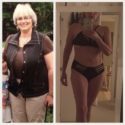
I’ve lost over 50 pounds
I’ve lost over 50 pounds. I’m 56 years old. Cutting processed food and unhealthy fats from my diet was one of the first things I did on my health recovery journey...I went cold turkey off the bad oils. Emptied my pantry into the trash and just started eating real food
Mitzi Wilkinson Champion
Knowledge I didn’t know I needed
Your Fatburn Fix book is amazing, my friend. Thank you! I’m an Functional Nutritional Therapy Practitioner and I know my stuff. This is the extra layer of knowledge I didn’t know I needed. Well done!
Jennifer Dillman
Fatburn Fix reader
Lost a solid 20 lbs and my bloodwork is great
I have lost a solid 20 lbs and my bloodwork (after 3 months of eating your way) was even better! I was metabolically healthy (per your book) before I read your book, but barely. Lowering my weight, sealed the deal! I have been talking about you and your book to anyone who will listen...Thank you for all you’ve done and what you continue to do! You are changing lives for the better!
Missy Cramer
FatBurn Fix reader
Lost 20 lbs I could never shed
I love your Fatburn Fix! Has helped me so so much! I have had the dreaded weight all my life - 20 or so pounds I could never shed. I have lost that now. I only eat 2 meals a day lunch and dinner with a glass of milk or cappuccino around 4 to hold me over. No snacking and not bad oils. It has been the key to unlocking my fatburn. I work out in the am and believe I am burning fat for energy not from food!
Lauren Smith
I feel great
My waist is four inches smaller. I feel great and many of the minor aches and pains that I had (knees and lower back) are gone. Also, my muscle tone is amazing, even though I have not increased my workout routine.
Richard Janelle
Completed Dr Cate's online course

The go-to for strength and conditioning coaches
Whenever I advise my clients about eating to perform I go straight to what I have learned from Dr. Cate. Her book Deep Nutrition has become the go-to for strength and conditioning coaches across the country.
Kent Matthes
Major League Baseball Agent with WME Sports

Dismantles the lie
Dr. Cate dismantles the lie that seed oils are healthy, which may the biggest lie about nutrition and health because it’s so insidious.
Ken D Berry, MD
Author of Lies My Doctor Told Me

She knows the chemistry
Dr. Cate alerts us to the harms of seed oils and she’s convincing because she knows the chemistry better than anyone.
Dr. Drew Pinskey, MD
Globally recognized internal medicine and addiction medicine specialist, media personality, LoveLine Host, and New York Times bestselling author
No one is better at communicating nutritional truth
Dr. Cate has had the single greatest impact on how we talk to people about fueling for both performance or durability. While we all are a little unique, the foundational principles of human nutrition are immutable. If you are looking to create a more durable, resilient body, no one is better at communicating nutritional truth than Dr. Cate.
Dr. Kelly Starrett
Physiotherapist coach and New York Times and Wall Street Journal bestselling author

Highly recommend The Fatburn Fix
Dr. Shanahan has had a significant impact on my practice of medicine. I am known as a Low Carb Doctor, but I never really appreciated the negative effects of processed seed oils on the health of my patients. I highly recommend The Fatburn Fix to my patients and have a loaner copy in my waiting room. It is amazing how quickly blood sugars and overall health improves with cutting seed oils. It is not just about the carbs!
Dr. Brian Lenkzes, MD
CEO of LowCarbMD San Diego, co-host of Low Carb MD Podcast and host of Life's Best Medicine Podcast

Respected in the sports world
Dr. Cate reordered my diet when I was with the L.A. Lakers, and the benefits, for me personally, were felt immediately and have served me to this day. I’ve come to take real food so seriously I started a small family farm. I know of no M.D./nutritionist more respected in the sports world than Dr. Cate Shanahan.
Chris Kaman
NBA Player

Brought seed oil issue front and center
Cate brought the seed oil issue front and center. Healthy fats matter. So much so that I created an entire product line to swap out bad fats with good.
Mark Sisson
Founding Father of the Primal/Paleo Movement

Optimal health starts with food
If you want to understand how optimal health starts with food, start with Dr. Cate. Her book Deep Nutrition leaves you with an appreciation of the profound relationship between our genes and the planet, inspiring us to be good shepherds of both.
Dallas Hartwig
Attribution author of The Whole 30

Helped me with endurance
Deep Nutrition really helped me with endurance. I started to feel better as a player. I was able to run more, I was able to be more active …and I just decided to keep going with it to this day.
Dwight Howard
NBA Player

Silver bullet for me
Dr Cate’s teachings helped me lose 60 pounds like it was nothing. It was like a silver bullet for me.
Paul Grewal, MD
Dr Grewal Internal Medicine, MD, author of Genius Foods

Radically improve your health…
Dr. Shanahan has provided a solid reference that deserves a place in the library of anyone who is seriously interested in nutrition. Her perspective on the vital role that healthy fat has in our diet is novel and, if implemented, can radically improve your health.
Dr. Joseph Mercola
Author of Fat for Fuel and Founder of Mercola.com

Pull up a chair…
I have based my work on the idea that getting the right kinds of healthy fats into your body and avoiding the worst fats is essential to optimal health. I've interviewed dozens of the world's top experts about this, and I know of no one who speaks more eloquently on this topic than Dr Cate. If she’s talking fats, pull up a chair. Take notes.
Dave Asprey
Author of the Bulletproof Diet
The key to unlocking my fatburn
I love your Fatburn Fix! Has helped me so so much! I have had the dreaded weight all my life - 20 or so pounds I could never shed. I have lost that now. I only eat 2 meals a day lunch and dinner with a glass of milk or cappuccino around 4 to hold me over. No snacking and not bad oils. It has been the key to unlocking my fatburn.
Lauren Smith
Saved my life
I would like to thank you for literally saving my life. Back in February, I had to be hospitalized while on vacation in Phoenix with an A1C of 11% and had to start taking 2 types of insulin and 2 other meds. I read the Fatburn Fix in April, and followed the program to a tee, and I’m down by 15 pounds, 6.8 A1C, and only one once weekly diabetes medicine.
Leontyne Tompkins
> Tears of joy
I'm crying tears of joy and appreciation for all you've done for me and my health! Without Deep Nutrition and Fatburn Fix, I would literally still be in the vicious cycle I'd been fighting all my life! In a nutshell - I am no longer a compulsive overeating addict suffering under the crushing 'thumb' of all food and alcohol.
Penni Wicks
What’s wrong with the scenario?
First, this 57 year old mother of three got the wrong dietary advice: Cut fat. This almost always leads to eating more carbs. Then, she was started on a pill that hasn’t been tested on women for more than a short period of time, about 2 years in the average study. Together, the high-carb diet and the statin medication set her up for more health problems, and do surprisingly little to prevent her risk of heart attack or stroke.
The chance of a high-carb diet cutting this patient’s, or anyone’s, risk of heart disease is zero. (See Good Calories Bad Calories, by Gary Taubes, and Chapter 9 of my book, Deep Nutrition) The chance of this woman, who has no other risk factors for heart disease aside from high LDL cholesterol (a poor predictor by itself), benefitting from Crestor’s ability to prevent heart attacks is less than one in a thousand. That’s less than one tenth of one percent. Her chance of developing one of the long-term side-effects of Crestor—diabetes—is about thirty percent. Other long-term risks of Crestor and all other members of the statin class of drugs include cancer, balance disorders, dementia, kidney problems, heart failure, gastritis, and septic infections.
In causing diabetes and further weight gain, the low-cholesterol approach has done this woman more harm than good.
What should have happened?
If you have high cholesterol, I’d much rather you treat your high cholesterol with a low-carb diet that includes plenty of fresh vegetables and healthy, natural fats including cholesterol-rich butter and cream, which help your digestive system to absorb the phytonutrients in veggies. Cut snack chips, cookies, crackers, and ice cream. Switch out your cereals, puffy bread sandwiches, bagels, noodles, and other starchy, empty calorie foods for healthy protein-rich foods, including pastured eggs and cheese, or bacon that’s nitrate free. Make sure to avoid vegetable oils, and don’t overcook any meats.
The goal is not to get your total cholesterol under 200, or any other arbitrary number. The goal is to make sure your cholesterol metabolism is running smoothly. If you don’t smoke, and your LDL to HDL ratio is less than three to one and your triglycerides are under 150, even if your total count is 250, that’s a real good indication your lipid metabolism is working correctly and, here’s the real point, your arteries are likely to be nice and clean.
According to the latest statistical accounting (you can watch the symposium video at: http://cme.medscape.com/viewarticle/720591), low HDL is a much more serious problem than anyone expected, and potentially more serious than high LDL!
If your low-cholesterol diet didn’t work, or if you developed diabetes after starting Crestor, or another cholesterol-pill, we’d like to hear from you. Your stories will help others!

Related Posts
This Post Has 14 Comments
Comments are closed.
Note: Please do not share personal information with a medical question in our comment section. Comments containing this content will be deleted due to HIPAA regulations.

I ate a typical Ameican diet into my 40’s gained weight up to 200 lbs. I tried different diets would loose weight then gain it back. Then I tried Atkins and got my weight down to 168. Kept it there on Atkins diet for three years all the time being told by family and my Doctor that it was very unhealthy and I should drop the diet. Taking my doctors advise I started eating grains again and cut the fats, I started putting on weight and my cholesterol went up to 220. My doctor put me on Statins and it went back down, I continued to gain weight, got put on blood pressure pills. I got extreme muscle pain and weakness, the doctor insisted it couldn’t be from the drugs and sent me to physical therapy and gave me more drugs for the pain. I had to start hiring a neighbor to cut my lawn because I had no energy. My next visit my PSA was high and my doctor sent me to a Urologist who did an atopasy, which was benign. He also tested my Testrone and it was 1/4 the normal low level. My doctor wanted to start testrone injections, i decided to wait 6 months before deciding. My weight was now up to 215. I decided to give up on the Doctors and went cold turkey off my drugs and went back on Atkins, then with more research modified it to low carb whole foods, now after 8 weeks, my energy is back, my muscle pain is gone, I have lost 25 pounds and I am still loosing weight. I feel great and I now consider doctors as drug dealers, I will only use them to sow me up if needed but never again rely on their nutrition advise, they don’t know what they are talking about.
Need advice. 66 year old retired single male. Healthy and active.I’ve been on lipitor for many years, due to rising LDL and family history. Cardiologist 4 years ago did stress and Halter monitor (for slight arrhythmias) declared me normal at 62 years of age.
Last spring, my glucose levels topped out at just over 6 . My doctor told me to get on a low carb diet. I lost 25 pounds. now @160. The HbA1C levels dropped to 5.8 from 6.1.The fasting glucose didn’t. I need to gain weight with diet. Help!
I’ll be establishing an online consultation service to provide personalized information and guidance to folks like you who deserve to hear from a health processional disentangled from relations with big Pharma. I’m all booked up for May but will begin scheduling for June in the next few weeks.
Described my condition above. Feeling healthy but looking emaciated at high school weight. 6’1″ and now down to under 160lbs. I lost 25 lbs. At 65 yrs. looking all wrinkled, etc.
I’m eating well but can’t gain weight back on low carb diet. no matter how much I eat.
Help !!
If you havent read either of my books I’d recommend starting there. Low carb is one key to a healthy diet but several other essentials of traditional diets (the foods your genes “expect”) will help with your skin and body composition.
Thank you. I will take this and eat an egg without guilt. 🙂 I am looking forward to tomorrow night’s telecast.
I guess time will tell as the high cholesterol didn’t happen until I went low carb. I have to laugh though. I got your response right before my sister called. She lives off coffee, sugar and anything out of a package (seriously). She was just calling to say her cholesterol results looked great and I should probably ditch the eggs for Cheerios. Let’s just say I’m hoping you and Sally Fallon are right. ; )
You have lots of company!
I’m confused. My doctor just did my lab work and wants me to come back in. I have been following your food recommendations (and that of GAPS) for several months. I am not overweight, and don’t eat sugar or processed foods anymore. I have reversed the pre-diabetes diagnosis!!! 🙂 But, I think the increase in eggs (I eat a dozen a week on average), some cheese and butter and red meat (grass fed) may be the culprit of the cholesterol concerns. Should I be worried? At 39, the cholesterol number is 226, triglyceride is 67, HDL 51, LDL Direct 154, Chol/HDL Risk Ratio is 4.43, after fasting. They say these numbers are too high. I don’t smoke. Should I switch my diet again? I feel so much better on a high protein diet. But, maybe I’m not as healthy as I think I am???
First of all, it’s tragic that we train physicians to treat people like numbers. The outcome is that more people who, like you, have improved their health and feel better will be scared into taking pills to make their numbers look “better” with better being defined by drug-company funded research. I would encourage you to reread Chapter 8 of Deep Nutrition, and the Doctor’s Order’s section of Food Rules to understand why doctors like myself, who understand that the cause of heart disease is oxidized lipoproteins and not “total cholesterol” or normal LDL, and why we would not treat you like a number (ever) and especially not based on those lab tests.
Thank you. I will re-read those chapters and take them to my appointment. So, even though my LDL/HDL isn’t less than 3:1, I can still eat eggs? I am so glad your books were on the library display shelf. Everything has changed for us. I must admit: my extended family isn’t convinced cream, butter and eggs are ok since high cholesterol runs in the family (my mom references the Mayo Health/Diet book). My grandparents died at 92. I hope your research is right. I feel so much better this way and don’t plan to return to packaged foods.
Your LDL is more closely tied to your carb consumption than your fat consumption. I suspect if you keep carbs under 100 gm per day, or less if you need to lose weight (30-70 is ideal), your LDL will drop.
I apologize for my confusion. But, my diet has never been lower in carbs than it is now. I follow the meal plans at Nourished Kitchen (minus starches/grains/sweets). I’m feeling pressured to give up red meat, egg yolks and dairy. I’ve been on your program for almost six months. I’m so disappointed; I wanted my numbers to reflect good health. I’m hypoglycemic (PCOS) so high protein makes me a kinder mother and less shaky. Regarding the cholesterol, is there something else I’m missing?
Dr Mary Vernon suggests, and I agree, that the most powerful predictor of heart attack is a triglyceride to HDL ratio above 4, with higher being worse. Yours is less than 2, which is absolutely excellent.
Bottom line 1) if you are feeling better you are on a better path than before and 2) Those numbers are already good and I suspect your HDL will rise further the longer you stick with your plan.
Remember Aesop’s fable about the boy, the donkey, and the man with the moral: Please all and you will please none.
So you must do what you think makes sense!
If you have concerns, starting in May I will be doing phone consultations and we can go into more personal detail for you.