
JAMA Internal Medicine published the first-ever study comparing butter to seed oils. But they skewed…
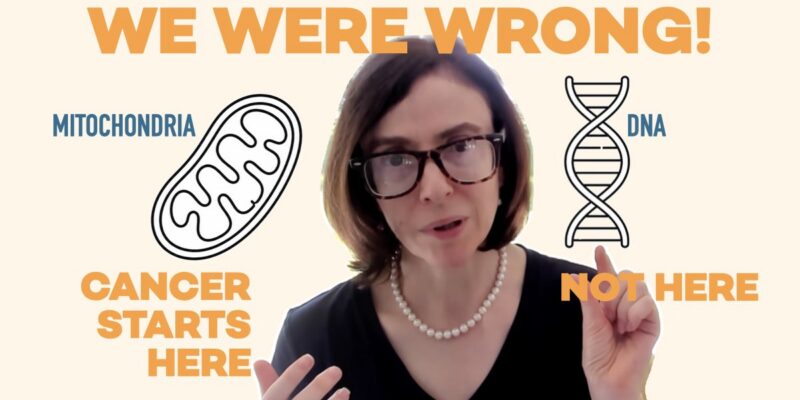
What if our diet can cause cancer? An overlooked theory on carcinogenesis
Medical science has failed to cure cancer. It’s time to rethink the cause of cancer.
Most of us have been taught to think the origin of cancer is a genetic mutation. A stray radiation particle, or some toxin, causes an unlucky DNA mutation. That mutation gives rise to a cancer cell, which divides and divides until it takes over our body and kills us.
We’ve since learned that the story is a little more complicated. That our immune system can fight off cancer, and does so all the time. Only when the immune system fails does cancer spread and become lethal. Our ideas obout how cancer begins, however, are still the same.
But what if that origin story is also wrong?
This article is continued below...(scroll down)


It helped. I feel great.
"It’s helped. I feel great."
Kobe Bryant
NBA baskeball player

This has been life changing
"Let me tell you this has been life-changing. I have all of her books, in audible and ebooks! I have gotten rid of all the hateful 8 oils. I have trained my body to eat its own previously toxic body fat. Download that pod it's a game changer!"
Megyn Kelly
Broadcaster / The Megyn Kelly Show

Life changing
Deep Nutrition changed my life.
Jesse Watters
Fox News Primetime host
Saved my life
I would like to thank you for literally saving my life. Back in February, I had to be hospitalized while on vacation in Phoenix with an A1C of 11% and had to start taking 2 types of insulin and 2 other meds. I read the Fatburn Fix in April, and followed the program to a tee, and I’m down by 15 pounds, 6.8 A1C, and only one once weekly diabetes medicine. Prior to reading the book, it was almost impossible for me to lose weight as a diabetic.
Leontyne Tompkins
I feel free
For the last month, I have really been reading all labels on everything. I have completely remove those 8 oils you talk about. I must tell you, I feel great! I have more energy and I am now 197 lbs (have always been around 205 to 210lbs). I eat potatoes with real butter, grass fed steak, pasta with the right toppings. I eat everything! I seem to crave less sugar. I love it!
Robert Kirkendall
I feel so much better
I had terrible aches and pains everywhere in my body, my hands, shoulders and knees. I feel so much better and the way I feel is motivating me every day! Thank you
Mike Deb Wootan Burcin
Better than ever
I am an anesthesiologist in Orlando and a huge fan of both of your books! I have been incorporating your principles for the last 10 months and feel that my health is better than ever.
Marnie Robinson, MD
My allergies disappeared
The biggest difference for me (and a surprising one) is that my allergies have almost completely disappeared! This is a big deal for me, because I’ve had allergies most of my life and they have often affected what I do which is a teaching music in [a public school district]. In general, I feel much better and have more consistent energy throughout the day.
Erica Turrell
Heart Palpitations have Stopped
I’ve lost 20+ pounds (also fasting 16-24 hours daily) and haven’t had palpitations except for one occasion — I had a mini bag of Fritos for the first time in July. And, I feel better now on a daily basis than I ever did all through college.
Mike Wright
Deep Nutrition and Fatburn Fix reader

I’ve lost over 50 pounds
I’ve lost over 50 pounds. I’m 56 years old. Cutting processed food and unhealthy fats from my diet was one of the first things I did on my health recovery journey...I went cold turkey off the bad oils. Emptied my pantry into the trash and just started eating real food
Mitzi Wilkinson Champion
Knowledge I didn’t know I needed
Your Fatburn Fix book is amazing, my friend. Thank you! I’m an Functional Nutritional Therapy Practitioner and I know my stuff. This is the extra layer of knowledge I didn’t know I needed. Well done!
Jennifer Dillman
Fatburn Fix reader
Lost a solid 20 lbs and my bloodwork is great
I have lost a solid 20 lbs and my bloodwork (after 3 months of eating your way) was even better! I was metabolically healthy (per your book) before I read your book, but barely. Lowering my weight, sealed the deal! I have been talking about you and your book to anyone who will listen...Thank you for all you’ve done and what you continue to do! You are changing lives for the better!
Missy Cramer
FatBurn Fix reader
Lost 20 lbs I could never shed
I love your Fatburn Fix! Has helped me so so much! I have had the dreaded weight all my life - 20 or so pounds I could never shed. I have lost that now. I only eat 2 meals a day lunch and dinner with a glass of milk or cappuccino around 4 to hold me over. No snacking and not bad oils. It has been the key to unlocking my fatburn. I work out in the am and believe I am burning fat for energy not from food!
Lauren Smith
I feel great
My waist is four inches smaller. I feel great and many of the minor aches and pains that I had (knees and lower back) are gone. Also, my muscle tone is amazing, even though I have not increased my workout routine.
Richard Janelle
Completed Dr Cate's online course

The go-to for strength and conditioning coaches
Whenever I advise my clients about eating to perform I go straight to what I have learned from Dr. Cate. Her book Deep Nutrition has become the go-to for strength and conditioning coaches across the country.
Kent Matthes
Major League Baseball Agent with WME Sports

Dismantles the lie
Dr. Cate dismantles the lie that seed oils are healthy, which may the biggest lie about nutrition and health because it’s so insidious.
Ken D Berry, MD
Author of Lies My Doctor Told Me

She knows the chemistry
Dr. Cate alerts us to the harms of seed oils and she’s convincing because she knows the chemistry better than anyone.
Dr. Drew Pinskey, MD
Globally recognized internal medicine and addiction medicine specialist, media personality, LoveLine Host, and New York Times bestselling author

No one is better at communicating nutritional truth
Dr. Cate has had the single greatest impact on how we talk to people about fueling for both performance or durability. While we all are a little unique, the foundational principles of human nutrition are immutable. If you are looking to create a more durable, resilient body, no one is better at communicating nutritional truth than Dr. Cate.
Dr. Kelly Starrett
Physiotherapist coach and New York Times and Wall Street Journal bestselling author

Highly recommend The Fatburn Fix
Dr. Shanahan has had a significant impact on my practice of medicine. I am known as a Low Carb Doctor, but I never really appreciated the negative effects of processed seed oils on the health of my patients. I highly recommend The Fatburn Fix to my patients and have a loaner copy in my waiting room. It is amazing how quickly blood sugars and overall health improves with cutting seed oils. It is not just about the carbs!
Dr. Brian Lenkzes, MD
CEO of LowCarbMD San Diego, co-host of Low Carb MD Podcast and host of Life's Best Medicine Podcast

Respected in the sports world
Dr. Cate reordered my diet when I was with the L.A. Lakers, and the benefits, for me personally, were felt immediately and have served me to this day. I’ve come to take real food so seriously I started a small family farm. I know of no M.D./nutritionist more respected in the sports world than Dr. Cate Shanahan.
Chris Kaman
NBA Player

Brought seed oil issue front and center
Cate brought the seed oil issue front and center. Healthy fats matter. So much so that I created an entire product line to swap out bad fats with good.
Mark Sisson
Founding Father of the Primal/Paleo Movement

Optimal health starts with food
If you want to understand how optimal health starts with food, start with Dr. Cate. Her book Deep Nutrition leaves you with an appreciation of the profound relationship between our genes and the planet, inspiring us to be good shepherds of both.
Dallas Hartwig
Attribution author of The Whole 30

Helped me with endurance
Deep Nutrition really helped me with endurance. I started to feel better as a player. I was able to run more, I was able to be more active …and I just decided to keep going with it to this day.
Dwight Howard
NBA Player

Silver bullet for me
Dr Cate’s teachings helped me lose 60 pounds like it was nothing. It was like a silver bullet for me.
Paul Grewal, MD
Dr Grewal Internal Medicine, MD, author of Genius Foods

Radically improve your health…
Dr. Shanahan has provided a solid reference that deserves a place in the library of anyone who is seriously interested in nutrition. Her perspective on the vital role that healthy fat has in our diet is novel and, if implemented, can radically improve your health.
Dr. Joseph Mercola
Author of Fat for Fuel and Founder of Mercola.com

Pull up a chair…
I have based my work on the idea that getting the right kinds of healthy fats into your body and avoiding the worst fats is essential to optimal health. I've interviewed dozens of the world's top experts about this, and I know of no one who speaks more eloquently on this topic than Dr Cate. If she’s talking fats, pull up a chair. Take notes.
Dave Asprey
Author of the Bulletproof Diet
The key to unlocking my fatburn
I love your Fatburn Fix! Has helped me so so much! I have had the dreaded weight all my life - 20 or so pounds I could never shed. I have lost that now. I only eat 2 meals a day lunch and dinner with a glass of milk or cappuccino around 4 to hold me over. No snacking and not bad oils. It has been the key to unlocking my fatburn.
Lauren Smith
Saved my life
I would like to thank you for literally saving my life. Back in February, I had to be hospitalized while on vacation in Phoenix with an A1C of 11% and had to start taking 2 types of insulin and 2 other meds. I read the Fatburn Fix in April, and followed the program to a tee, and I’m down by 15 pounds, 6.8 A1C, and only one once weekly diabetes medicine.
Leontyne Tompkins
> Tears of joy
I'm crying tears of joy and appreciation for all you've done for me and my health! Without Deep Nutrition and Fatburn Fix, I would literally still be in the vicious cycle I'd been fighting all my life! In a nutshell - I am no longer a compulsive overeating addict suffering under the crushing 'thumb' of all food and alcohol.
Penni Wicks
What if cancer originates in something far less random, and far easier for us to prevent and avoid?
Dr. Thomas Seyfried, a cancer researcher at Boston College, says it’s time to rethink cancer’s origins. He has spent decades undermining the idea that these random unlucky mutations cause cancer. His view, which he’s supported with a massive academic book on the topic, is that cancer is not genetic but metabolic. If we want to beat cancer, we need to discard the old idea that genetic mutations cause cancer.
When I first heard Dr. Seyfried discuss his research, way back in 2012, it immediately caught my attention. This could explain why chemotherapy doesn’t work that well: because chemotherapy doesn’t correct the underlying metabolic problem. It could also explain why people with no family history of cancer, who never smoke, eat organic, and do “all the right things” nevertheless develop cancer. So I started looking into it.
I soon found that Seyfried’s idea is not new. It’s built on foundational work that’s been all but forgotten.
Dr. Otto Warburg Discovered Damaged Mitochondria Can Cause Cancer
Mitochondria are kidney bean-shaped little organelles inside our cells (see image above). They do a really important job: give our cells energy. Nearly a century ago, Nobel Prize-winning scientist Otto Warburg observed that cancer cells had mitochondria that behaved abnormally. They used glucose to generate energy much more often than healthy cells. Healthy cells burn mostly fat for fuel, particularly between meals. Glucose is supposed to be the cellular backup fuel for times when oxygen is used up, like when running for your life.
The process of using glucose to generate energy without oxygen is called fermentation. As in fermenting grapes to make wine, fermenting malt to make beer, or fermenting milk to make cheese. Fun fact: the organisms creating these delicious foods don’t require oxygen. Another fun fact: when you’re exercising really hard, that burn you feel in your muscles is a sign that your cells have resorted to fermentation. The phenomenon eventually came to be known as the Warburg effect.
How Scientists Tested Dr. Warburg’s Theory of Carcinogenesis
Here’s an excerpt from Dark Calories, where I explain the experiment that convinced me Dr. Warburg and Dr. Seyfried are right: (You can read some of this original research for yourself here.)
He [Dr. Seyfried] described an elegant sequence of experiments that could disprove the gene theory of cancer once and for all. [Scientists] performed microsurgery on cancerous cells, showing that mitochondria from cancer cells transmitted cancer, while mutated DNA from cancer cells did not. They also designed experiments to test where the DNA mutations came from. Those experiments showed that mitochondrial dysfunction was causing DNA mutations rather than the other way around. This is irrefutable evidence that cancer comes down to mitochondrial dysfunction, not DNA mutation, exactly as Warburg predicted. And it demands we use a radically different strategy for beating cancer than what we’ve been pursuing for the past three-quarters of a century. We’ve been killing rapidly dividing cells when what we should be doing is healing our broken metabolism.
~Dark Calories Chapter 8: “Reason for Hope”
I remember learning about the Warburg effect in school. But I didn’t learn it was linked to cancer.
Why are doctors not taught that mitochondrial damage can cause cancer?
It so happened that Dr. Warburg was German. After WWII, all things German were considered politically incorrect. With the discovery of DNA’s structure in the 1950s, the world’s focus shifted to DNA mutations. So for geopolitical reasons and prejudice, Dr. Warburg’s groundbreaking ideas went underground, fading from our collective memory. A crazy part of being human is that we tend to do stuff for reasons that have nothing to do with logic.
By misunderstanding cancer’s origins, we’ve also been treating cancer wrong.
Not only have we been thinking about carcinogenesis wrong. We’ve been thinking about anti-cancer therapies all wrong. Because if cancer begins primarily with mitochondrial damage and metabolic dysfunction, then cancer treatments should target those broken mitochondria. Instead, most chemotherapy has, for decades, targeted rapidly dividing cells, hoping to kill more of the cancer cells than healthy human cells. This shotgun approach has many unintended side effects, including hair loss, extreme nausea, and immune suppression. Due to the immune suppression and fluid losses, these treatments sometimes result in patient death. And still, after all that, often the cancer cells survive.
Dr. Seyfried says a much smarter approach would be to starve cancer cells of glucose with a very low-carb, ketogenic diet. His experiments show this idea works pretty well. Not 100%, but much better than standard care. He’s successfully used a low-carbohydrate ketogenic diet to stall and even reverse tumor growth in laboratory animals, and others have replicated the work.
This research is so incredible that multiple organizations are now spreading the word. What this means is, if you have cancer and you want to learn more, you can get help.
Key Nonprofits Supporting Keto for Cancer
Metabolic Terrain Institute of Health (MTIH): Dedicated to integrating metabolic therapies into cancer care. They offer patient treatment grants, help individuals access trained metabolic clinicians, and provide peer support networks.
The Charlie Foundation for Ketogenic Therapies: While historically focused on epilepsy, this foundation provides dedicated resources, meal guidelines, and dietary therapy consultations specifically for cancer patients and oncology nutritionists.
Foundation for Metabolic Cancer Therapies: This charity funds clinical trials and research evaluating the efficacy of ketogenic diets (e.g., in glioblastoma treatments) alongside standard cancer care.
Matthew’s Friends – Specializing in medical ketogenic diet therapies since 2004. Roots in epilepsy, neurological and metabolic disorders, and emerging cancer types.
Nutrition and Metabolism Society – Researching keto for cancer. Richard Feinman, Eugene Fine & Dan Pincus.
HOWEVER: Dr. Seyfried and all these organizations are overlooking something vital.
And it might just help the keto diet work even more effectively.
Sugar Probably Doesn’t Cause Cancer As Much as You Might Guess
The fact that cancer needs sugar has led many people to believe sugar is essentially a carcinogen. In fact, you’ll see statements to that effect from some of the prominent people supporting keto for cancer. They’ve developed an interesting hypothesis to support the idea that sugar can cause cancer. The hypothesis works more or less like this: 1. Diets high in refined sugars cause hyperglycemia (high blood sugar). 2. High blood sugar causes inflammation, which can harm mitochondria. 3. High blood sugar also elevates insulin. 4. Elevated insulin causes inflammation. 5. That inflammation also degrades mitochondrial health.
Certainly cutting sugar once you have cancer is important. But as far as causing cancer in the first place, the evidence is, in my view, relatively weak.
The weakest link is the idea that insulin promotes inflammation. The thinking is that excessive insulin overstimulates something called the MAPK pathway, which promotes cell growth and inflammation. Therefore, high circulating insulin levels actively promote a pro-inflammatory environment in the vascular system, contributing to cardiovascular disease and fat storage. But linking this to mitochondrial dysfunction is highly speculative.
The idea that sugar causes insulin resistance is also a bit overstated, in my view. High blood sugar levels can cause a problem known as glycation, which can promote inflammation. Glycation occurs even at normal blood sugar levels, but it scales exponentially with hyperglycemia. But our blood sugar levels only remain high for extended periods once we already have full-blown diabetes. In other words, a healthy person can eat a lot of sugar, but won’t experience nearly as much glycation as someone with diabetes, which means they won’t suffer much inflammation from their sugar consumption.
What’s more, not all inflammatory responses are the same. Hyperglycemia elevates certain cytokines involved in fighting infection. But experiments linking hyperglycemia to meaningful insulin resistance are lacking. In other words, it’s not clear that the kind of inflammation driven by hyperglycemia can actually cause insulin resistance.
Much more plausible, I think, is the link between seed oils and cancer. Because seed oils contain oxidized fatty acids that can directly damage mitochondria.
My Theory on How Seed Oils May Cause Cancer
In my peer-reviewed paper, The Energy Model of Insulin Resistance, I describe a mechanism by which seed oils cause mitochondrial oxidative stress, which powerfully promotes inflammation. I also argue that before you develop cancer, you develop insulin resistance. But doctors don’t look for insulin resistance; we only look for signs of diabetes, so children and adults with insulin resistance usually don’t know they have it. If you want to get screened, I teach you how to do that here. You want to know if you are insulin resistant becuase, if you have insulin resistance, not only does it mean you are at risk of developing type 2 diabetes, it also means you have a much higher risk for cancer.
But doctors are not trained on any of this. So to arrive at answers myself, I’ve spent many years studying the work of scientists such as:
-
Martin Grootveld, who reveals how cooking certain fatty acids transforms them into toxins that can cause cancer.
-
Denham Harmon and other free radical biologists. These experts identify oxidative stress as a driver of mitochondrial and cellular dysfunction.
-
Gerhard Spiteller, whose research shows how saturated fat has been wrongly blamed for diseases caused by the PUFA fats in seed oils.
-
And of course Dr. Seyfried, who we’ve been discussing here.
Among others. I cite their work, and many others, in my paper and in my books.
In my view, these sorts of experts need to be better integrated into medical science. They should operate together, but they remain isolated. Medical science should bring experts from these fields into cancer conferences. But they don’t. And until these structural shifts take place, if you want to be healthy, you need to take matters into your own hands.
(My books integrate this overlooked research into the science of human health. And the book that most directly discusses seed oils and cancer is my latest, Dark Calories.)
What Evidence Links Seed Oils to Cancer?
We do not have randomized clinical trials showing that removing seed oils from people’s diets prevents cancer. Such trials would be extraordinarily difficult to conduct given the decades-long development of many cancers. But the absence of that particular kind of evidence does not mean there is “no evidence.”
We know that processed foods and fried foods increase cancer risk. Even though seed oils are ubiquitous ingredients in processed foods, very few people are even asking whether seed oils might cause cancer. There are some; here are a few examples:
- Repeatedly heated frying oil has been linked to various cancers. You may not reheat your cooking oil, but the restaurants you go to do. And so do the makers of chips, crackers, and other junk foods.
- Even without reheating, high-PUFA refined oils are linked to cancer.
- Breathing the volatiles released during the frying of refined high-PUFA oils has been linked to lung cancer.
We also have a kind of logical algorithm that links these oils to cancer. There is evidence that polyunsaturated fats oxidize more easily than the saturated fats we’ve largely removed from our diets. There is evidence that heating high-PUFA oils generates reactive aldehydes and other lipid oxidation products (discussed below). There is evidence that these compounds can damage proteins, DNA, antioxidant systems, and mitochondria. There is evidence connecting mitochondrial dysfunction with metabolic dysfunction and carcinogenesis.
This is all indirect, sure. But bear in mind that the evidence linking alcohol to birth defects is similarly indirect.
And we also have what I would consider pretty direct, damning evidence coming primarily from Dr. Martin Grootveld’s lab.
Cooking with Seed Oils Generates Carcinogens, Directly Linking Seed Oils to Cancer
Dr. Martin Grootveld at De Montfort University in Leicester, England, has spent decades studying what happens chemically when cooking oils are heated.
His work has particular relevance to refined seed oils high in polyunsaturated fatty acids, or PUFA, including:
- soybean oil
- corn oil
- canola oil
- sunflower oil
- safflower oil
- grapeseed oil
Polyunsaturated fatty acids are chemically vulnerable to oxidation. Dr. Grootveld has repeatedly shown that when high-PUFA oils are heated, particularly during frying, their fatty acids undergo lipid peroxidation and generate a complex mixture of lipid oxidation products. Among these are highly reactive molecules called alpha, beta-unsaturated aldehydes. These include compounds such as acrolein and 4-hydroxynonenal (4-HNE), along with numerous other reactive aldehydes.
Aldehydes from Seed Oils Can Damage Mitochondria
Reactive aldehydes are like molecular vandals, on a mission to leave their mark on everything they touch. They can bind to proteins, DNA, and other cellular structures. They can impair antioxidant defenses, alter enzyme function, promote oxidative stress, and damage mitochondria. And research clearly demonstrates that these exact reactive aldehydes powerfully disrupt mitochondrial function and cause mitochondrial DNA damage.
In other words, foods made with high-PUFA oils can generate compounds capable of producing precisely the kinds of cellular injuries that become especially interesting if mitochondrial dysfunction is an initiating event in cancer. Not surprisingly, some of the aldehydes are known carcinogens. For example, crotonaldehyde, which is one of the most carcinogenic compounds in cigarette smoke.
This creates a connection that I believe deserves far more scientific attention. Seyfried’s work asks us to reconsider the cause of cancer. Grootveld’s work identifies a common dietary exposure capable of generating compounds that can damage mitochondria. And my own work on insulin resistance provides another piece of this puzzle.
(Dr. Grootveld liked Dark Calories so much that he invited me to take an honorary position at his university, and now we are working on several papers together!)
Population-Wide Evidence Also Links Seed Oils and Cancer
Seed oils have become ubiquitous in the modern food supply. They’re used extensively in restaurant cooking and frying and appear in countless packaged foods. For many people, exposure isn’t occasional. It occurs meal after meal, year after year. On a population-wide basis, the more seed oil we eat, the more metabolic disease we get. (Graph here.) The more metabolic disease we get, the more cancer we get.
This doesn’t mean seed oils are the only cause of cancer. Cancer is clearly multifactorial. Nor does it diminish established cancer-prevention measures such as avoiding tobacco. It means we need to broaden our conception of what a carcinogen does.
Who Wants a Paradigm Shift?
The prevailing paradigm has encouraged us to look primarily at nuclear DNA mutations. But cells are systems, and mitochondria sit at the center of cellular energy production, redox regulation, metabolism, and survival. Perhaps the better avenue of investigation is not simply: Does this substance mutate DNA? But rather: What does this substance do to the cell that ultimately makes cancer possible?
When we ask the question that way, the relationship between our modern food supply, mitochondrial injury, metabolic disease, and cancer becomes much harder to ignore. At the very least, the possibility deserves far more attention in cancer prevention than it currently receives.
You can help get the word out. Please share this message to your favorite social media platforms! (See icons below).
References
- Seyfried, T. N. (2012). Cancer as a metabolic disease: On the origin, management, and prevention of cancer. Wiley.
- Frontiers in Cell and Developmental Biology, 3, 43. https://doi.org/10.3389/fcell.2015.00043
- Shanahan, C. (2024). Dark calories: How vegetable oils destroy our health and how we can get it back. Balance.
- For more information on the different effects of dietary sugar upon inflammation in healthy subjects versus diabetics, this study compares high-fat and high-carbohydrate meals in healthy subjects and newly diagnosed diabetics. In healthy subjects, the high-fat meal increased TNF-? and IL-6, whereas the carbohydrate meal did not significantly increase these inflammatory markers. In diabetics, both meals did: Esposito, K., Marfella, R., Ciotola, M., Di Palo, C., Giugliano, D., Marotta, G., Leosco, D., Varricchio, G., & Rossi, F. (2002). Postprandial endothelial activation in healthy subjects and in type 2 diabetic patients: role of fat and carbohydrate meals. Journal of the American College of Cardiology, 39(9), 1520–1526.
- Shanahan, C. (2025). The energy model of insulin resistance: A unifying theory linking seed oils to metabolic disease and cancer. Frontiers in Nutrition, 12. Article 1532961.
- Ganesan, K., & Sukalingam, K. (2017). Impact of consumption of repeatedly heated cooking oils on the incidence of various cancers – A critical review. Critical Reviews in Food Science and Nutrition, 58(15), 2533–2542.
- Dobarganes, C., & Márquez-Ruiz, G. (2015). Possible adverse effects of frying with vegetable oils. British Journal of Nutrition, 113(S2), S49–S57.
- Chiang, C. T., Chuang, S. C., Chen, C. J., Wang, C. P., Hsiung, C. A., Wu, T. Y., Yang, T. Y., & Chen, K. Y. (2020). Impact of cooking oil fume exposure and fume extractor use on lung cancer risk in non-smoking Han Chinese women. Scientific Reports, 10(1), 6653.
- Grootveld, M. (2022). Evidence-based challenges to the continued recommendation and use of peroxidatively-susceptible polyunsaturated fatty acid-rich culinary oils for high-temperature frying practices: Experimental revelations focused on toxic aldehydic lipid oxidation products. Frontiers in Nutrition, 8, 711640
- Author, A. A., Author, B. B., & Author, C. C. (2012). Mitochondrial DNA damage and its consequences for mitochondrial gene expression. Mitochondrial Gene Expression, 58(3), 304–314.
-
IARC Monographs on the Identification of Carcinogenic Hazards to Humans, No. 128.IARC Working Group on the Identification of Carcinogenic Hazards to Humans.Lyon (FR): International Agency for Research on Cancer; 2021.
Grootveld’s work https://pubmed.ncbi.nlm.nih.gov/35071288/

Related Posts


This Post Has 5 Comments
Note: Please do not share personal information with a medical question in our comment section. Comments containing this content will be deleted due to HIPAA regulations.

Dr. Cate, thank you for putting this article together. I enjoyed this one the most. My mom passed from cancer when I was 14. Started as breast and spread all over, about 5 years, remission one time. When she went in remission I remember we were eating “low fat” everything and minimizing sweets. I learned from you that likely worked because she stopped getting so many of the hateful 8 oils and all the LOP’s that come with. Her mom passed from complications related to T2DM 2 years prior. After they both passed it really disbanded the family function on one side as they were Lynch pins. The consequences of the hateful 8 are far reaching.
Needless to say I love all your books and articles especially The Energy Model of Insulin Resistance. Its what I’ve seen happen with so many of my clients and how im helping my dad reverse his T2DM a second time. We reversed it last year but he got in a car accident and tore his meniscus. Got off track but back on it the past 3 months.
Im really looking forward to the articles you have coming out with Dr. Grootveld. Thats so exciting! Congrats on the honorary position at his university. You deserve it!
?
Mesothelioma
I got educated on fasting insulin marker in mid 90s to focus on instead of cholesterol by Dr Barry Sears, a endocrinologist researcher and his early insight on that and the role of signaling molecules made from eicosanoids and the role of Omega 3 in inflammation. Based on that I have managed to avoid any chronic disease that runs in my family including pre or full blown diabetes, high blood pressure and poor cardiovascular health and even arthritis in my 70s so far. I also realized instead of arguing which diet is best to prevent chronic diseases now I say do a study on yourself and see and whichever helps you avoid chronic diseases is the best for you. For me it is a Zone diet and now Keto. Both could work but some people it seems can also show they can achieve it with being mostly vegetarians. And the best markers to follow are fasting insulin, Hs Crp, visceral fat.
I am surprised that you have not been able to research to know the role of insulin and inflammation. Everyone has their own blinders. It’s too numerous to ignore. Insulin promotes fat storage and visceral fat which behave release pro inflammatory substances, can promote endothelial dysfunction, can impair NO production, AGE. Activates MTOR a major growth pathway.
•? ?Higher insulin ? increased Delta-5 desaturase activity
•? ?More DGLA converted into AA
•? ?Less DGLA available to produce PGE1 anti inflammatory prostaglandins
•? ?More AA available to produce PGE2, thromboxane A2, and leukotrienes when the body is stimulated, the pro inflammatory eicosanoids, the signaling hormones made in every cell
In other words, insulin doesn’t simply increase the production of one group of eicosanoids—it can shift the available substrate pool from DGLA toward AA. That subtle distinction is often overlooked. ChatGPT on Dr Barry Sears findings in the 1990s and which are well recognized today.
I met Dr. Barry Sears in 2010 and thanked him for his work. However, it quickly became apparent that he was completely unaware of LOPs. Like many before him and since, without that understanding, he had not been able to appreciate that oxidation drives inflammation more powerfully than the metabolic mechanism proposed for insulin.
This is, as usual interesting and thought provoking. My wife is fighting multiple myeloma now so very relevant. I’m glad you mentioned multifactorial however. We know that smoking is a huge risk factor and in the cases of childhood leukemia they haven’t lived long enough to damage mitochondria. You’ve presented some good arguments to support mitochondrial damage as one cause of cancer, definitely not the only cause in my opinion