
Is fasting more effective for weight loss than regular dieting and calorie counting? Dr. Cate reviews the most important studies and wraps with her recommendations based on 20 years of experience.
How to Lose Visceral Fat (And Why Most Advice Gets It Wrong)
We don’t like it, this spare tire of shame. We’d like to trade it in for a six-pack of pride. It’s not just vanity, either. As you’ve probably heard, belly fat—visceral fat—does not speak well of our metabolic health.
But here’s what you probably haven’t heard. Visceral fat is not due to lack of exercise or too many calories. It’s not even the real problem.
The Problem Behind Visceral Fat
When doctors talk about how visceral fat is associated with things like diabetes, heart disease, fatty liver, and even certain cancers, they’re right on the mark. It is.
This article is continued below...(scroll down)


It helped. I feel great.
"It’s helped. I feel great."
Kobe Bryant
NBA baskeball player

This has been life changing
"Let me tell you this has been life-changing. I have all of her books, in audible and ebooks! I have gotten rid of all the hateful 8 oils. I have trained my body to eat its own previously toxic body fat. Download that pod it's a game changer!"
Megyn Kelly
Broadcaster / The Megyn Kelly Show

Life changing
Deep Nutrition changed my life.
Jesse Watters
Fox News Primetime host
Saved my life
I would like to thank you for literally saving my life. Back in February, I had to be hospitalized while on vacation in Phoenix with an A1C of 11% and had to start taking 2 types of insulin and 2 other meds. I read the Fatburn Fix in April, and followed the program to a tee, and I’m down by 15 pounds, 6.8 A1C, and only one once weekly diabetes medicine. Prior to reading the book, it was almost impossible for me to lose weight as a diabetic.
Leontyne Tompkins
I feel free
For the last month, I have really been reading all labels on everything. I have completely remove those 8 oils you talk about. I must tell you, I feel great! I have more energy and I am now 197 lbs (have always been around 205 to 210lbs). I eat potatoes with real butter, grass fed steak, pasta with the right toppings. I eat everything! I seem to crave less sugar. I love it!
Robert Kirkendall
I feel so much better
I had terrible aches and pains everywhere in my body, my hands, shoulders and knees. I feel so much better and the way I feel is motivating me every day! Thank you
Mike Deb Wootan Burcin
Better than ever
I am an anesthesiologist in Orlando and a huge fan of both of your books! I have been incorporating your principles for the last 10 months and feel that my health is better than ever.
Marnie Robinson, MD
My allergies disappeared
The biggest difference for me (and a surprising one) is that my allergies have almost completely disappeared! This is a big deal for me, because I’ve had allergies most of my life and they have often affected what I do which is a teaching music in [a public school district]. In general, I feel much better and have more consistent energy throughout the day.
Erica Turrell
Heart Palpitations have Stopped
I’ve lost 20+ pounds (also fasting 16-24 hours daily) and haven’t had palpitations except for one occasion — I had a mini bag of Fritos for the first time in July. And, I feel better now on a daily basis than I ever did all through college.
Mike Wright
Deep Nutrition and Fatburn Fix reader

I’ve lost over 50 pounds
I’ve lost over 50 pounds. I’m 56 years old. Cutting processed food and unhealthy fats from my diet was one of the first things I did on my health recovery journey...I went cold turkey off the bad oils. Emptied my pantry into the trash and just started eating real food
Mitzi Wilkinson Champion
Knowledge I didn’t know I needed
Your Fatburn Fix book is amazing, my friend. Thank you! I’m an Functional Nutritional Therapy Practitioner and I know my stuff. This is the extra layer of knowledge I didn’t know I needed. Well done!
Jennifer Dillman
Fatburn Fix reader
Lost a solid 20 lbs and my bloodwork is great
I have lost a solid 20 lbs and my bloodwork (after 3 months of eating your way) was even better! I was metabolically healthy (per your book) before I read your book, but barely. Lowering my weight, sealed the deal! I have been talking about you and your book to anyone who will listen...Thank you for all you’ve done and what you continue to do! You are changing lives for the better!
Missy Cramer
FatBurn Fix reader
Lost 20 lbs I could never shed
I love your Fatburn Fix! Has helped me so so much! I have had the dreaded weight all my life - 20 or so pounds I could never shed. I have lost that now. I only eat 2 meals a day lunch and dinner with a glass of milk or cappuccino around 4 to hold me over. No snacking and not bad oils. It has been the key to unlocking my fatburn. I work out in the am and believe I am burning fat for energy not from food!
Lauren Smith
I feel great
My waist is four inches smaller. I feel great and many of the minor aches and pains that I had (knees and lower back) are gone. Also, my muscle tone is amazing, even though I have not increased my workout routine.
Richard Janelle
Completed Dr Cate's online course

The go-to for strength and conditioning coaches
Whenever I advise my clients about eating to perform I go straight to what I have learned from Dr. Cate. Her book Deep Nutrition has become the go-to for strength and conditioning coaches across the country.
Kent Matthes
Major League Baseball Agent with WME Sports

Dismantles the lie
Dr. Cate dismantles the lie that seed oils are healthy, which may the biggest lie about nutrition and health because it’s so insidious.
Ken D Berry, MD
Author of Lies My Doctor Told Me

She knows the chemistry
Dr. Cate alerts us to the harms of seed oils and she’s convincing because she knows the chemistry better than anyone.
Dr. Drew Pinskey, MD
Globally recognized internal medicine and addiction medicine specialist, media personality, LoveLine Host, and New York Times bestselling author

No one is better at communicating nutritional truth
Dr. Cate has had the single greatest impact on how we talk to people about fueling for both performance or durability. While we all are a little unique, the foundational principles of human nutrition are immutable. If you are looking to create a more durable, resilient body, no one is better at communicating nutritional truth than Dr. Cate.
Dr. Kelly Starrett
Physiotherapist coach and New York Times and Wall Street Journal bestselling author

Highly recommend The Fatburn Fix
Dr. Shanahan has had a significant impact on my practice of medicine. I am known as a Low Carb Doctor, but I never really appreciated the negative effects of processed seed oils on the health of my patients. I highly recommend The Fatburn Fix to my patients and have a loaner copy in my waiting room. It is amazing how quickly blood sugars and overall health improves with cutting seed oils. It is not just about the carbs!
Dr. Brian Lenkzes, MD
CEO of LowCarbMD San Diego, co-host of Low Carb MD Podcast and host of Life's Best Medicine Podcast

Respected in the sports world
Dr. Cate reordered my diet when I was with the L.A. Lakers, and the benefits, for me personally, were felt immediately and have served me to this day. I’ve come to take real food so seriously I started a small family farm. I know of no M.D./nutritionist more respected in the sports world than Dr. Cate Shanahan.
Chris Kaman
NBA Player

Brought seed oil issue front and center
Cate brought the seed oil issue front and center. Healthy fats matter. So much so that I created an entire product line to swap out bad fats with good.
Mark Sisson
Founding Father of the Primal/Paleo Movement

Optimal health starts with food
If you want to understand how optimal health starts with food, start with Dr. Cate. Her book Deep Nutrition leaves you with an appreciation of the profound relationship between our genes and the planet, inspiring us to be good shepherds of both.
Dallas Hartwig
Attribution author of The Whole 30

Helped me with endurance
Deep Nutrition really helped me with endurance. I started to feel better as a player. I was able to run more, I was able to be more active …and I just decided to keep going with it to this day.
Dwight Howard
NBA Player

Silver bullet for me
Dr Cate’s teachings helped me lose 60 pounds like it was nothing. It was like a silver bullet for me.
Paul Grewal, MD
Dr Grewal Internal Medicine, MD, author of Genius Foods

Radically improve your health…
Dr. Shanahan has provided a solid reference that deserves a place in the library of anyone who is seriously interested in nutrition. Her perspective on the vital role that healthy fat has in our diet is novel and, if implemented, can radically improve your health.
Dr. Joseph Mercola
Author of Fat for Fuel and Founder of Mercola.com

Pull up a chair…
I have based my work on the idea that getting the right kinds of healthy fats into your body and avoiding the worst fats is essential to optimal health. I've interviewed dozens of the world's top experts about this, and I know of no one who speaks more eloquently on this topic than Dr Cate. If she’s talking fats, pull up a chair. Take notes.
Dave Asprey
Author of the Bulletproof Diet
The key to unlocking my fatburn
I love your Fatburn Fix! Has helped me so so much! I have had the dreaded weight all my life - 20 or so pounds I could never shed. I have lost that now. I only eat 2 meals a day lunch and dinner with a glass of milk or cappuccino around 4 to hold me over. No snacking and not bad oils. It has been the key to unlocking my fatburn.
Lauren Smith
Saved my life
I would like to thank you for literally saving my life. Back in February, I had to be hospitalized while on vacation in Phoenix with an A1C of 11% and had to start taking 2 types of insulin and 2 other meds. I read the Fatburn Fix in April, and followed the program to a tee, and I’m down by 15 pounds, 6.8 A1C, and only one once weekly diabetes medicine.
Leontyne Tompkins
> Tears of joy
I'm crying tears of joy and appreciation for all you've done for me and my health! Without Deep Nutrition and Fatburn Fix, I would literally still be in the vicious cycle I'd been fighting all my life! In a nutshell - I am no longer a compulsive overeating addict suffering under the crushing 'thumb' of all food and alcohol.
Penni Wicks
But here’s where the story goes sideways: visceral fat isn’t what causes all these problems. Visceral fat is the result of a metabolic breakdown that leads to all kinds of problems, including fat around the gut. In other words, visceral fat isn’t the cause; it’s a symptom.
It’s a symptom of a deep-seated metabolic problem. In other words, before you develop obvious visceral fat, your metabolism is already under stress. That’s why you develop it. It’s not driven that much by genetics. And while diabetes is often pegged as a contributing cause, diabetes itself is also a manifestation of the same, deeper metabolic issue.
In my work studying metabolic disease and modern diets, I’ve found that the metabolic driver of visceral fat is almost universally overlooked. So much so that many authorities assume that visceral fat causes metabolic disease—which is exactly backwards. This matters because it places way too much importance on the fat itself, which makes people think weight loss is a solution. Also, suggesting that the fat itself is the problem opens the door for opportunists selling quick-fix wellness products that waste your money and do nothing to address your metabolic dysfunction.
Since I get so many questions about supposed fat-burning supplements, I’ll dive right into that first.
Supplements Marketed as “Visceral Fat Burners”
Many products claim to “target belly fat” or “burn visceral fat,” but none address the underlying metabolic problem that leads to visceral fat accumulation. In my view, any supplement that actually works but does not supply the body with a missing nutrient is going to be functioning as a pharmaceutical, while being marketed as natural.
Green tea extract
Green tea extract is one of the most common ingredients in fat-burning supplements. It contains compounds called catechins that may slightly increase metabolism, especially when combined with caffeine. However, studies generally show only small changes in body weight, and there is little evidence that it specifically reduces visceral fat.
Berberine
Berberine has recently become popular as a so-called natural alternative to diabetes medications. Some studies suggest it can improve blood sugar control and insulin sensitivity, but most of these are published in journals that are essentially marketing tools for the wellness industry. I say this becuase I’ve read many of them and found glaring biases, errors, and leaps of logic. And even this questionable research has not shown consistent reductions in visceral fat.
Conjugated Linoleic Acid
Conjugated linoleic acid, or CLA, has long been marketed as a fat-loss supplement that targets belly fat. Research results are mixed, with some studies showing small changes in body fat and others showing none. In some cases, reductions in body fat appear to occur mainly in subcutaneous fat rather than visceral fat, which undermines the claim that it specifically targets abdominal fat around organs.
L-Carintine
L-carnitine is often promoted as a supplement that helps the body “burn fat for energy.” While carnitine plays a role in transporting fatty acids into mitochondria, supplementing with it has produced only modest weight loss in most studies, and there is little evidence that it selectively reduces visceral fat.
Dietary Sources of Carnitine
Besides, your body can make carnitine from scratch when you are well-nourished. For most healthy people, normal diets already provide adequate carnitine, which is why supplementation is usually unnecessary unless there is a specific medical reason. The richest carnitine sources are:
-
red meat
-
lamb
-
pork
-
dairy
Plant foods generally contain much smaller amounts.
Probioics
Probiotics have also been marketed as a way to reduce belly fat by improving gut health. Some small studies using specific bacterial strains have reported modest reductions in waist circumference or abdominal fat. However, results are inconsistent, and most commercial probiotic products do not contain the exact strains used in these studies.
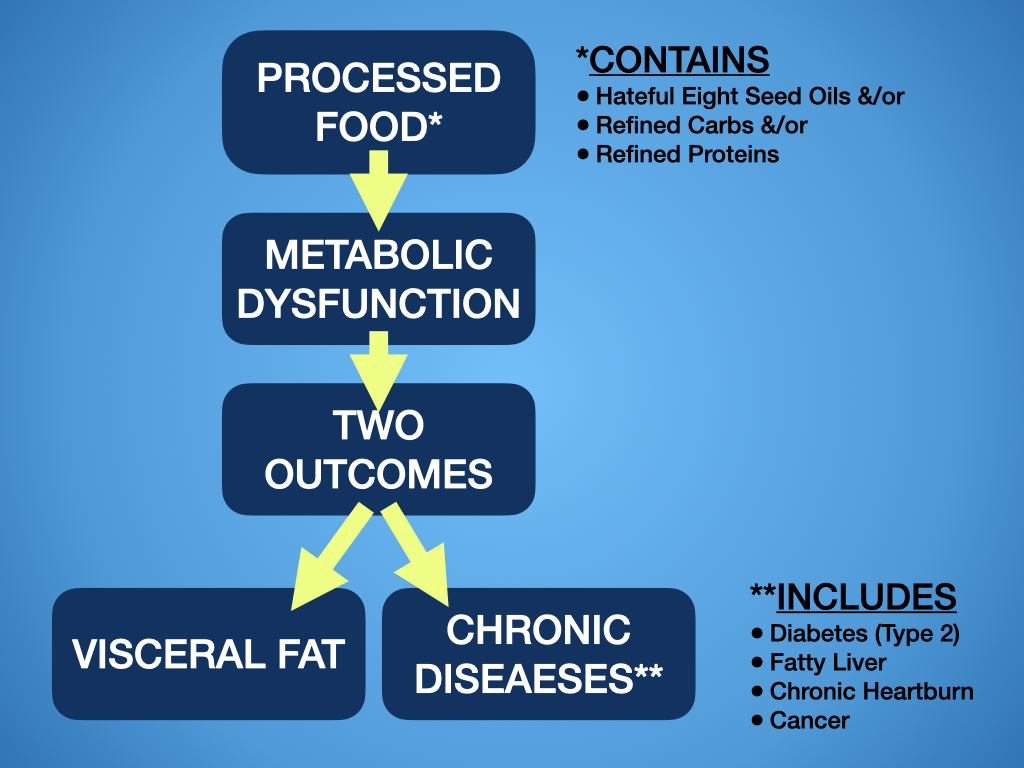
I think this research is mostly bogus as it represents yet another example of reverse causality. The foods that disrupt metabolism—what I call the big three ingredients that put the junk in junk food (see image)—also promote unhealthy shifts in gut bacteria. When people stop eating those foods and switch to a diet built around real foods, both metabolism and gut flora often improve naturally. In that situation, changes in gut bacteria are more likely a consequence of a better diet and metabolic health rather than the original cause of fat loss.
Apple Cider Vinegar Capsules
Apple cider vinegar capsules are another popular remedy promoted for belly fat reduction. Although vinegar may slightly affect blood sugar responses after meals, this is also from mostly dubious research. And even this low-quality research has not shown meaningful reductions in visceral fat. Most of the benefits claimed for these products rely on very limited evidence.
That said, apple cider vinegar and ALL vinegars are best consumed in real food. For example, salad dressing. Acids like these can help stimulate digestive enzyme release from the pancreas, thus soothing some people’s dyspepsia.
Fiber Supplements
Fiber supplements (such as glucomannan, and inulin) are often advertised as appetite suppressants that help people lose weight.
Taking fiber supplements may slightly increase feelings of fullness and may support weight loss IF combined with healthy eating habits. It’s not clear to me that fiber supplements support satiety because most of the research linking fiber to satiety is done on food, like whole veggies, fruits, and beans, not supplements. Even if supplements did support satiety, this does not specifically target visceral fat or correct the metabolic disturbances that lead to it, but this huge limitation is rarely revealed in marketing materials.
Taken together, these products illustrate a common pattern. Most supplements marketed for visceral fat are bogus. Besides, if you focus only on losing visceral fat, you will miss the deeper issue that caused it in the first place. And you won’t necessarily be reducing your health risks very much.
Understanding this relationship changes how you should think about losing visceral fat.
Here’s another way to think about visceral fat and the likelihood that supplements can melt it away:
Visceral fat isn’t just extra weight. It’s a change in where the body stores energy. When your metabolism is working well, excess calories tend to be stored under the skin in subcutaneous fat. But when your metabolism is not working right (when you have insulin resistance), the body begins storing more energy deep inside the abdomen around organs and in the liver.
So visceral fat is less about a bulging belly and more about how your metabolism is functioning.
Visceral Fat Is a Warning Sign
One helpful way to think about visceral fat is to imagine the warning light on a car’s dashboard. When the light turns on, it tells you something deeper in the engine is not working properly. You could smash the light so it stops flashing, but that would not fix the engine.
Visceral fat works in a similar way. It is often treated as the problem itself, but in reality, it usually signals that the body’s metabolism—especially insulin signaling and energy regulation—has become disrupted. This condition is commonly known as insulin resistance.
When insulin resistance develops, the body begins storing more energy in the abdomen and liver. Over time, visceral fat begins to accumulate. This means the real issue is not simply the fat itself, but the metabolic state that caused it.
What Causes Visceral Fat?
Visceral fat is sometimes blamed on genetics or aging, but the strongest driver appears to be modern processed diets. Foods that commonly promote metabolic disruption include refined sugars, refined flours, industrial seed oils, ultra-processed snack foods, and protein isolates or powders.
These foods place unusual stress on the body’s metabolic systems. Over time, they can contribute to insulin resistance, chronic inflammation, oxidative stress, and disrupted energy regulation. As these changes develop, the body begins shifting where it stores energy.
Instead of storing most fat under the skin, more energy begins to accumulate deep in the abdomen around organs. This is visceral fat. In other words, visceral fat is less about how much fat the body stores and more about how metabolism is functioning.
You may have noticed that many normal-weight people have unusual bulging bellies or apple-shaped bodies. That’s most often visceral fat. (Other possibilities include advanced liver disease or skeletal abnormalities that shorten the lumbar spine.)
Why Weight Loss Alone May Not Solve the Problem.
Many weight-loss programs focus primarily on shrinking fat mass. And it is true that losing weight often reduces visceral fat. However, most weight-loss programs can not correct the metabolic disturbance that causes visceral fat to develop in the first place.
People can lose weight through severe calorie restriction, appetite-suppressing medications, or crash diets. These approaches may shrink fat stores temporarily but may not fully restore healthy metabolism. If insulin resistance and metabolic stress remain, the body may still be at higher risk for conditions linked to type 2 diabetes, including fatty liver disease, blood clots, high blood pressure, stroke, neuropathic pain, and certain cancers.
For this reason, the real goal should not simply be losing visceral fat. The more important goal is restoring healthy metabolism.
The Real Way to Reduce Visceral Fat
When metabolism improves, visceral fat often decreases naturally. The most effective way to improve metabolic health is to remove the foods that disrupt it.
Start by reducing or eliminating the biggest metabolic stressors in the modern diet, including refined sugars, refined flour products, industrial seed oils, highly processed packaged foods, and protein powders or isolates. These foods tend to drive unstable blood sugar and insulin signaling.
Instead, eat real foods. My first book, Deep Nutrition, reveals how our ancestors used real food to build incredibly resilient bodies. Our nutritional needs have not changed, and in spite of the fact that we now demonize red meat and animal fats, those foods are some of the best for our bodies. Whole proteins, such as eggs, meat, fish, and poultry, along with animal fats and virgin plant oils, as well as nuts, legumes, vegetables, and small amounts of fruit, can all play a role in healing metabolic dysfunction.
When meals are built around real foods rather than processed ingredients, the body’s energy systems begin functioning more normally. Insulin sensitivity improves, inflammation decreases, and fat distribution often begins to normalize.
Over time, this process commonly leads to a gradual reduction in visceral fat.
The Bottom Line
Visceral fat is often described as dangerous fat that special protocols will fix. But it is better understood as a symptom of a deeper problem. It tells us that the body’s metabolism has become stressed, often after years of eating foods that disrupt normal energy regulation. And the good news is that the same diet that fixes visceral fat will also make your whole body healthy. This is yet another example of the principle I’ve been touting for years: Nature Makes it Simple!
In other words, following the kind of human diet that helps you feel your best will also help you look your best.
Understanding Insulin Resistance and Diabetes

Related Posts


This Post Has 12 Comments
Note: Please do not share personal information with a medical question in our comment section. Comments containing this content will be deleted due to HIPAA regulations.

Your blog always puts a smile on my face and makes me feel better about the world Thank you for being a source of light and positivity
I completely agree with your perspective on this topic It’s refreshing to see someone presenting a balanced and thoughtful viewpoint
I love how you incorporate personal stories and experiences into your posts It makes your content relatable and authentic
I’ve been following the GAPS protocol for almost 6 months now and stopped eating processed food long before that but continue to slowly gain weight around my belly. I walk 10k steps every day, practice yoga daily etc and sauna 3 times a week. Yet still exhibit signs of metabolic disease…
Hi Dr Kate, you mention that protein powders or isolates should be eliminated from your diet. Can you expand on that please? I was of the impression that protein isolates and concentrates from grass feed cattle were beneficial, especially in the provision of quality amino acids.
Thanks ?
Will do an article on this later this year.
Is the CB Collagen supplement that has your face on it a protein powder? Because I’ve been using it for years since I read Fatburn Fix.
Collagen powder is the exception, which is why it’s the only such supplement I can actually endorse.
I have long wondered why at a very young age (<30) I was prescribed beta blockers because I had hypertension. Was I born with a tendency to development high blood pressure? I later developed Type 2 diabetes, hemochromatosis, chronic gout in feet and ankles and very large bags under my eyes….not a great look!
Around 2 years ago I started reducing those dietary elements you mention and finally cut out all sweet sugary drinks and alcohol. I started noticing gradual weight loss but have more to go. My recent move away from all things wheat has had more impact. As you know wheat was genetically modified in Australia in mid 1940s and not until recently has there been an understanding of the lost value from the original strain. I was surprised to learn that the anti-inflammatory value of some components in the original strain has reduced by around 800%. So, while the wheat in itself doesn't cause toxicity it also doesn't do the same job it did for our ancestors in protecting our metabolism. Bread is known as the staff of life because of its ubiquitous consumption worldwide so it follows that any impact on its metabolic value will have an impact on many especially those with marginal metabolic resilience. Could my early hypertension be associated with what was done to wheat because I used to consume lots of bread and still did up until a few months ago?
Visceral fat is NOT what you think. The enterocytes in the liver have been overwhelmed by excess intake of deuterium. That fat laden deuterium is stored in adipocytes. For a skilled clinician you can see the deuterium shadows on a T1 MRI.
The problems with excess deuterium is everything slows to crawl as deuterium (D) is twice as heavy as protium (hydrogen+). The collection of deuterium in storage anywhere in the body is a serious issue for optimal health. Deuterium is normally floating around in the blood stream and can be depleted by UV/IR/NiR exposure from direct sunlight. Yes, sunlight exposure is good for you & optimal health.
Belly fat is subcutaneous fat, NOT visceral fat. Again, UV/IR/NiR sunlight exposure to your uncovered torso will lessen belly fat.
With visceral fat & subcutaneous fat there are many studies and observations of people’s across the world that provide evidence to these descriptions above.
Hi,
I have removed seed oil from my diet and it has helped. My blood work shows good results now.
After I read this article I have a question.
Why would you include protein powder as something that promotes visceral fat? I’m going to gym regularly and take protein powder. Should I be concerned?
Ghalib
As a biological dentist and licensed nutritionist in New York State and who has, for the past 30 plus years, integrated nutrition, homeopathy and herbal medicine into both of my practices, I highly recommend all of Dr. Cate’s books. She is making a major contribution to the field of diet and nutrition. Please join her email list for up to date medical/nutritional information that will change your life and push your body in the direction of health and wellness. It is never too late to change eating habits! Stanley E. Kacherski, DDS, MS, CN