
Dr. Cate Shanahan is the leading authority on nutrition and human metabolism. A board-certified Family Physician with over 20 years of clinical experience, and NY Times bestselling author of The FatBurn Fix, Deep Nutrition and Food Rules, her expertise is fixing the underlying problems that cause metabolic damage and inflammation, leading to autoimmunity, weight gain, diabetes, cancer and accelerated aging processes. Her passion is helping people feel their best.
Metabolic Conditions Dr. Cate Helps to Prevent & Reverse
- Overweight and obesity
- Prediabetes and diabetes
- Cancer
- Autoimmune diseases (inflammatory bowel, multiple sclerosis, rheumatoid arthritis, psoriasis, lupus)
- Cholesterol and blood lipid issues
- Hypertension
- Arthritis
- Chronic fatigue
- Fatty liver
- Neuropathy
- Headache
- Poor circulation
- Macular degeneration
- Asthma
- Allergies
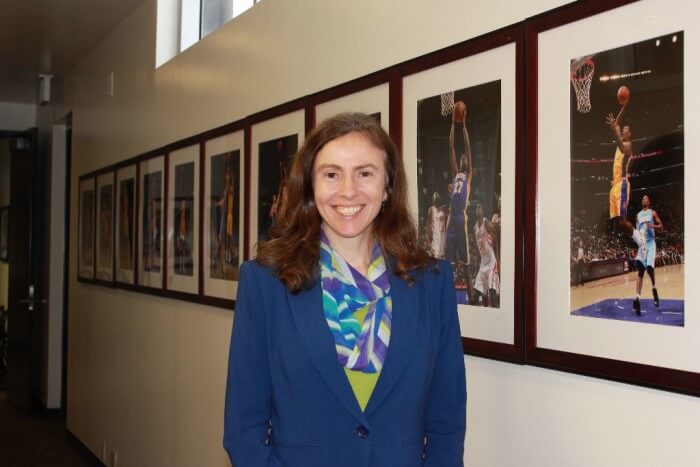
After getting her BS in biology from Rutgers University, she trained in biochemistry and genetics at Cornell University’s graduate school before attending Robert Wood Johnson Medical School. She practiced in Hawaii for ten years where she studied ethnobotany and her healthiest patient’s culinary habits. She applied her learning and experiences in all these scientific fields to write Deep Nutrition: Why Your Genes Need Traditional Food. Together with Dr. Tim DiFrancesco and NBA legend Gary Vitti, she created the PRO Nutrition program for the LA Lakers and helped forge a partnership between Whole Foods Market and numerous NBA teams. In May of 2018 she begin Director of Metabolic Health for ABC Fine Wine and Spirits, a progressive, family-run company interested in saving money by the betterment of health.
She’s also the Medical & Scientific Advisor at CB Supplements, overseeing their premium-grade multi collagen protein, and for beliv, a forward-thinking Latin American beverage company.
Testimonials
“…[W]e trust Dr. Cate implicitly. I’ve seen great results from it from when I started doing it last year.”
– Kobe Bryant, LA Lakers? (1)
” Everything they’re telling us, one, it makes sense, and two, [Shanahan] has science to back it up….I used to have stiffness in my knees, but not anymore. I’m sticking with it. I’ve noticed a change.”
– Steve Blake, LA Lakers (2,3)
“I like [PRO Nutrition] I think it’s good for everybody…because it prolongs our lives, and generations after us will be healthier because we eat healthy. It really helped me with endurance [and] I started to feel better as a player. I was able to run more, I was able to be more active because of my diet change, and I just decided to keep going with it to this day. I can tell once I’ve [cheated], my body feels different.”
– Dwight Howard, Houston Rockets (4,5)
“I’ve definitely noticed my joints aren’t as sore, aren’t as stiff when I wake up.”
– Chris Kaman (6)
“Dr. Cate celebrates the deep connection to nature that food provides, and beautifully illuminates the scientific realities of that connection.”
– Jason Wachob Founder & Co-CEO, mindbodygreen
“Working with Dr. Shanahan, I’ve radically changed my diet. I can’t tell you how much better I feel: tons more energy and a minor stomach pot is disappearing fast. I’m calmer and getting restful sleep, which I’d about resigned myself to doing without for the rest of my life. Incidentally, my high blood pressure is decent for a change and those annoying, stubborn skin rashes are next in line for full attention. Knee and neck pain from long ago injuries are gone; my joints are looser and more flexible. I’m happy as a clam. Health and longevity are vital interests of mine. “I’ve got to live a long time so I can write my books,” is what I say. Plus I’m addicted to feeling good, my blessedly lucky state for most of my life.”
– JoAnne Lordahl, Kaui resident and Author Princess Ruth
WE CANNOT BELIEVE THE CHANGES! My parents call us to talk about buying grass-fed liver and to brag about their awesome food and lifestyle upgrades. I am SO HAPPY that you were able to help them transition. We got such a kick out of the phone calls) – “Did you know that sugar feeds cancer?” I am more than impressed by the depth and bredth of Dr. Shanahan’sknoweldge. More importantly, as the daughter of one of her patients – I am amazed by her effectiveness. Dr. Shanahan listens carefully to my mother’s concerns and clearly shares and explains health-saving information. In a few short weeks, my mother transformed from a life-long junk food eater to a nutritional maven. She is losing excess weight, showing large improvements in her blood work and – most critically – strengthening the systems of her body to help her as she undergoes chemotherapy and surgery in her ongoing fight against cancer. As a family, we are fortunate beyond measure to have Dr. Cate in our corner!
– Lizzie Harris McCormick, PhD. Long Island City, NY
I have suffered from plantar fasciitis, Achilles tendonitis and a myriad of other sports injuries off and on for 30 years. I always attributed it to running too much, being active, getting older etc. etc. Not only did Dr Cate heal my ailing joint and tendons but my skin looks amazing! That coupled with the anti- inflammatory diet has cleared up my adult cystic acne as well and we are well into the dog days of summer in Atlanta. Usually by this time of year my skin is a mess as and I am happy to say it looks and feels great. My body feels happy!
– Pattie Blohm, Milton, GA
In a matter of six weeks I lost six pounds, my blood sugars are in much better control, my blood pressure dropped from the 140/80 range to 112/72, I feel much less hungry and have a lot more energy. I’m not really eating a lot less, but rather a lot different.
– M Davis, Manchester, NH
Articles about Dr. Cate and her professional athletes:
Dwight Howard:
http://www.cbssports.com/nba/writer/ken-berger/24370416
Here’s part 2, about Paleo/Primal:
http://www.cbssports.com/nba/writer/ken-berger/24373097/nutrition-in-the-nba-part-ii-paleo-diet-taking-hold-for-variety-of-reasons
References:
1) http://www.cbssports.com/nba/writer/ken-berger/24370416
2) http://www.cbssports.com/nba/writer/ken-berger/24370416
3) http://www.ocregister.com/articles/shanahan-527039-diet-food.html
4) http://www.ocregister.com/articles/shanahan-527039-diet-food.html
5) http://www.cbssports.com/nba/writer/ken-berger/24370760/nutrition-in-the-nba-part-i-dwight-howard-qa
6) http://www.cbssports.com/nba/writer/ken-berger/24370416
“Nearly every disease I see is the inevitable product of a deranged metabolism. When metabolism is imbalanced it allows accumulating life stress (emotional, toxic, infectious) to divert your health down a wrong turn. Our first order of business working together is to get your metabolism turned around and back onto the safe road.
“While technologic interventions and pharmaceuticals work well as a last resort of after injuries and accidents, rehabilitation of a distressed metabolism requires a holistic, natural approach using a host of natural modalities. I’m excited to join forces with Primal Blueprint because I believe Mark Sisson and his team present the most sensible and effective strategies to enjoy real-world success with eating strategy, exercise success, stress management, and overall optimal gene expression.”
– Dr. Cate Shanahan

Mark Sisson interviews Dr Cate at his home in Malibu
Dr. Cate writes about the experiences that lead her to write Deep Nutrition and Food Rules:
In high school I competed in cross country and track at an international level and earned myself a four-year college athletic scholarship and an invitation to the Olympic trials for the 1500m race. But in college, my once-indestructible body started falling apart.
Sports Injuries I Suffered From
- Shin splints
- Achilles tendonitis
- Illeotibial band syndrome
- Patello-femoral pain
- Ankle impingement syndrome
- Pulled muscles
I was almost as intrigued with trying to solve the mystery of why I was the team member who kept getting sidelined by shin splints, tendonitis, and other sports injuries as I was frustrated by the fact of being injured. To learn more, after graduating I enrolled in Cornell University’s Molecular Biology program in hopes of somehow getting to the root of recurring sports injuries and being able to help competitive athletes like myself.
That was in the 1980s, when biotechnology was in its adolescence. I soon learned that genes are every bit as dynamic and alive as you and I, responding on a minute to minute basis to the world around them, and it was obvious to me that technology would never evolve to the point where it could keep up with the complexity of our inner biology. So I left graduate school to attend medical school in hopes of getting to the root of illness from the clinical angle.
Medical School Does Not Get to the Root of Illness
I started med school knowing that malnutrition could change human DNA, but by the time I left I’d learned so little about nutrition that I pretty much forgot about my goal of getting to the root of illness. I did learn that the problems I had could all be attributed to weak collagen in my joints and muscles, but had no idea why this problem affected me and not any of my parents or grandparents.
Only when I relocated to Hawaii, the state with the longest lifespan in the US, did I realize that I was immersed in a culture of healthy people who could teach me the secrets of what I’ve come to call “genetic wealth.”
Common External Signs of Genetic Wealth (Men and Women)
- Strong joints
- Fertility
- No grey hair by age 50
- Strong nails
- Limbs proportioned according to the Golden Ratio
- Long nose, high cheekbones, full lips, and strong jaw
Many of my patients were employed at the Hawaiian resorts. These women, in their 50s and 60s, worked all day long lifting, scrubbing, bending, reaching, and then when they got home they kept on going, making dinner for their husbands or chasing after the grandchildren they cared for. These women typically had beautiful skin, supple joints, and few if any grey hairs. Every last one had grown up in a rural area where they were raised as their parents and grandparents had been on home-grown fresh foods prepared according to simple traditional culinary techniques.
Traditional food is not what we think it is.
Some of the poorest people in the world eat the best foods. We call them subsistence farmers and uneducated, but they are masters of self sufficiency and posses skills that few of of us educated in America can even understand.
Everything I learned about diet in medical journals was turned on its head by my experience in Hawaii. Animals are actually easier to raise than vegetables, requiring only pastureland and water, and so many of my patients also raised their own goats, pigs, and chickens, and caught fish. I realized I was seeing firsthand the kinds of practical food-gathering, storing, and cooking solutions that our ancestors used throughout history; I was learning the foods that made us human.
Over the years I spent in Hawaii, I studied culinary traditions practiced by my patients, and found a world of delicious food and incredible sources of nutrients that is hidden from most Americans. I wrote Deep Nutrition to describe the connections I’d discovered between food and beauty and genes and health.
I hope you find it useful.
DISCLOSURES

I advice! https://disq.us/url?url=htt…
Good video by Dr Robert Cywes about parenteral feeding:
https://www.youtube.com/wat…
I read the 2012 version of her book Deep Nutrition. How is the 2017 version any different? Do I need to buy it?
nice try vegan, now get out
Cut all the sugars / sugar replacements and PUFAs for a start.
Cut all the sugars/ sugar replacements and PUFAs for a start
I have 6 aneurism,s what can help that ??
there is actually so much truth to eating well. All of the processed food Americans eat is detrimental our health. If you really look at what they put in food to preserve it is disgusting. However, because of convenience Americans are ruining their health, becoming overweight and eating way too much sugar. I am Type II diabetic; my father was type II then became type I as he grew older because he relied on medication and ate what he pleased. I am on no medication and watch my diet. Eating healthy works; it is a shame more doctors and the government do not support healthier diets. All the oils and additives in fast foods is killing Americans with disease like Cancer.
Promotion of supplements? She provides what she takes. Not sure how she is promoting it. She’s not making money off of them. She doesn’t own them. And, she picked the less expensive supplements. Doesn’t make sense.
How much weed oil are you consuming? When I first did keto I used a lot of seed oil (in salad dressing, margin, and healthy keto snacks). Once I switched it to red meat, eggs, and bacon cooked in butter. My blood results came back much better.
I see 93 to 97% all over.
I haven’t had seed oil in about a decade. I was tested for covid19 and was positive. I got a mild cold for a day. I don’t doubt her hypothesis.