
It might seem like the science linking cholesterol to heart attacks is solid. It might…
Pay for Performance
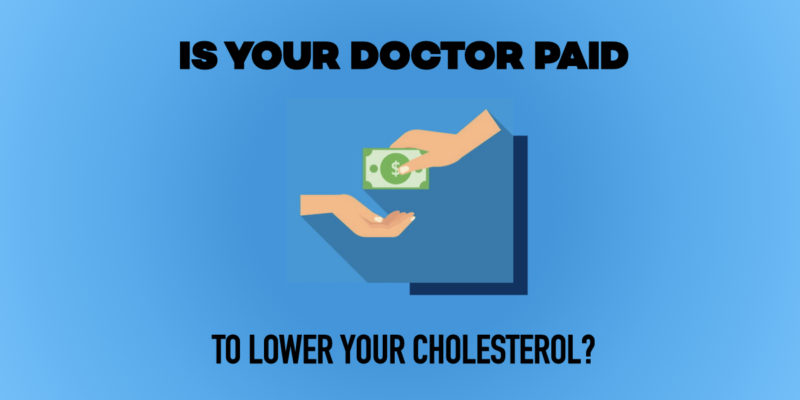
Your Doctor May be Paid to Prescribe Cholesterol-Lowering Statins
Do you know what a HEDIS measure is? Most patients don’t, and few doctors do. It’s a measure of how well your doctor is following certain practice guidelines. 90 percent of insurance companies grade doctors using HEDIS. And it’s important to know that these markers include getting your LDL cholesterol numbers down with drugs. If you have diabetes or cardiovascular disease, your doctor can be rewarded for following these rules. On the other hand, doctors who don’t will be financially penalized.
This is one reason why I do not work with insurance. Below this paragraph is this page as it was originally published in 2008. I’m updating it now in 2023, as it’s more relevant than ever. Why? Because the guidelines for an appropriate LDL level are even lower today than they were. I believe this is a dangerous practice for many reasons, particularly for mental health and memory.
Learn more about HEDIS measures here.
Letter to the Editor:
Penalties for Doctors Who Refuse to Sell Cholesterol Drugs
On Wednesday July 9, 2008 the Garden Island Newspaper published my Letter To The Editor with the headline above (Thank you Garden Isle)
This article is continued below...(scroll down)

I feel my patients and the people of Hawai‘i have the right to know some of what goes on behind the scenes at HMSA, our island’s number one health insurance company. This week, I will participate in a teleconference about a new initiative program created by HMSA as part of what they call “quality of care.” If you have diabetes, your doctor will be paid more if he or she convinces you to buy a cholesterol-lowering pill. How much more? If I get all my diabetics on these pills, I calculate that I may earn up to $20,000 more next year. Sounds great for me, and you might think I’d be an idiot to question such an easy cash gift. But I don’t think I’ll go for it. I don’t think there is enough scientific evidence that this practice will help all my diabetic patients, and I can’t justify such mindless, mass prescribing.
For more information on what’s happening behind the scenes, check out www.drcate.com And if you are a paying customer of HMSA, you might want to join the discussion by contacting HMSA’s vice president/medical director John Berthiaume. Catey Shanahan, M.D.
It helped. I feel great.
"It’s helped. I feel great."
Kobe Bryant
NBA baskeball player

This has been life changing
"Let me tell you this has been life-changing. I have all of her books, in audible and ebooks! I have gotten rid of all the hateful 8 oils. I have trained my body to eat its own previously toxic body fat. Download that pod it's a game changer!"
Megyn Kelly
Broadcaster / The Megyn Kelly Show

Life changing
Deep Nutrition changed my life.
Jesse Watters
Fox News Primetime host
Saved my life
I would like to thank you for literally saving my life. Back in February, I had to be hospitalized while on vacation in Phoenix with an A1C of 11% and had to start taking 2 types of insulin and 2 other meds. I read the Fatburn Fix in April, and followed the program to a tee, and I’m down by 15 pounds, 6.8 A1C, and only one once weekly diabetes medicine. Prior to reading the book, it was almost impossible for me to lose weight as a diabetic.
Leontyne Tompkins
I feel free
For the last month, I have really been reading all labels on everything. I have completely remove those 8 oils you talk about. I must tell you, I feel great! I have more energy and I am now 197 lbs (have always been around 205 to 210lbs). I eat potatoes with real butter, grass fed steak, pasta with the right toppings. I eat everything! I seem to crave less sugar. I love it!
Robert Kirkendall
I feel so much better
I had terrible aches and pains everywhere in my body, my hands, shoulders and knees. I feel so much better and the way I feel is motivating me every day! Thank you
Mike Deb Wootan Burcin
Better than ever
I am an anesthesiologist in Orlando and a huge fan of both of your books! I have been incorporating your principles for the last 10 months and feel that my health is better than ever.
Marnie Robinson, MD
My allergies disappeared
The biggest difference for me (and a surprising one) is that my allergies have almost completely disappeared! This is a big deal for me, because I’ve had allergies most of my life and they have often affected what I do which is a teaching music in [a public school district]. In general, I feel much better and have more consistent energy throughout the day.
Erica Turrell
Heart Palpitations have Stopped
I’ve lost 20+ pounds (also fasting 16-24 hours daily) and haven’t had palpitations except for one occasion — I had a mini bag of Fritos for the first time in July. And, I feel better now on a daily basis than I ever did all through college.
Mike Wright
Deep Nutrition and Fatburn Fix reader

I’ve lost over 50 pounds
I’ve lost over 50 pounds. I’m 56 years old. Cutting processed food and unhealthy fats from my diet was one of the first things I did on my health recovery journey...I went cold turkey off the bad oils. Emptied my pantry into the trash and just started eating real food
Mitzi Wilkinson Champion
Knowledge I didn’t know I needed
Your Fatburn Fix book is amazing, my friend. Thank you! I’m an Functional Nutritional Therapy Practitioner and I know my stuff. This is the extra layer of knowledge I didn’t know I needed. Well done!
Jennifer Dillman
Fatburn Fix reader
Lost a solid 20 lbs and my bloodwork is great
I have lost a solid 20 lbs and my bloodwork (after 3 months of eating your way) was even better! I was metabolically healthy (per your book) before I read your book, but barely. Lowering my weight, sealed the deal! I have been talking about you and your book to anyone who will listen...Thank you for all you’ve done and what you continue to do! You are changing lives for the better!
Missy Cramer
FatBurn Fix reader
Lost 20 lbs I could never shed
I love your Fatburn Fix! Has helped me so so much! I have had the dreaded weight all my life - 20 or so pounds I could never shed. I have lost that now. I only eat 2 meals a day lunch and dinner with a glass of milk or cappuccino around 4 to hold me over. No snacking and not bad oils. It has been the key to unlocking my fatburn. I work out in the am and believe I am burning fat for energy not from food!
Lauren Smith
I feel great
My waist is four inches smaller. I feel great and many of the minor aches and pains that I had (knees and lower back) are gone. Also, my muscle tone is amazing, even though I have not increased my workout routine.
Richard Janelle
Completed Dr Cate's online course

The go-to for strength and conditioning coaches
Whenever I advise my clients about eating to perform I go straight to what I have learned from Dr. Cate. Her book Deep Nutrition has become the go-to for strength and conditioning coaches across the country.
Kent Matthes
Major League Baseball Agent with WME Sports

Dismantles the lie
Dr. Cate dismantles the lie that seed oils are healthy, which may the biggest lie about nutrition and health because it’s so insidious.
Ken D Berry, MD
Author of Lies My Doctor Told Me

She knows the chemistry
Dr. Cate alerts us to the harms of seed oils and she’s convincing because she knows the chemistry better than anyone.
Dr. Drew Pinskey, MD
Globally recognized internal medicine and addiction medicine specialist, media personality, LoveLine Host, and New York Times bestselling author
No one is better at communicating nutritional truth
Dr. Cate has had the single greatest impact on how we talk to people about fueling for both performance or durability. While we all are a little unique, the foundational principles of human nutrition are immutable. If you are looking to create a more durable, resilient body, no one is better at communicating nutritional truth than Dr. Cate.
Dr. Kelly Starrett
Physiotherapist coach and New York Times and Wall Street Journal bestselling author

Highly recommend The Fatburn Fix
Dr. Shanahan has had a significant impact on my practice of medicine. I am known as a Low Carb Doctor, but I never really appreciated the negative effects of processed seed oils on the health of my patients. I highly recommend The Fatburn Fix to my patients and have a loaner copy in my waiting room. It is amazing how quickly blood sugars and overall health improves with cutting seed oils. It is not just about the carbs!
Dr. Brian Lenkzes, MD
CEO of LowCarbMD San Diego, co-host of Low Carb MD Podcast and host of Life's Best Medicine Podcast

Respected in the sports world
Dr. Cate reordered my diet when I was with the L.A. Lakers, and the benefits, for me personally, were felt immediately and have served me to this day. I’ve come to take real food so seriously I started a small family farm. I know of no M.D./nutritionist more respected in the sports world than Dr. Cate Shanahan.
Chris Kaman
NBA Player

Brought seed oil issue front and center
Cate brought the seed oil issue front and center. Healthy fats matter. So much so that I created an entire product line to swap out bad fats with good.
Mark Sisson
Founding Father of the Primal/Paleo Movement

Optimal health starts with food
If you want to understand how optimal health starts with food, start with Dr. Cate. Her book Deep Nutrition leaves you with an appreciation of the profound relationship between our genes and the planet, inspiring us to be good shepherds of both.
Dallas Hartwig
Attribution author of The Whole 30

Helped me with endurance
Deep Nutrition really helped me with endurance. I started to feel better as a player. I was able to run more, I was able to be more active …and I just decided to keep going with it to this day.
Dwight Howard
NBA Player

Silver bullet for me
Dr Cate’s teachings helped me lose 60 pounds like it was nothing. It was like a silver bullet for me.
Paul Grewal, MD
Dr Grewal Internal Medicine, MD, author of Genius Foods
Radically improve your health…
Dr. Shanahan has provided a solid reference that deserves a place in the library of anyone who is seriously interested in nutrition. Her perspective on the vital role that healthy fat has in our diet is novel and, if implemented, can radically improve your health.
Dr. Joseph Mercola
Author of Fat for Fuel and Founder of Mercola.com

Pull up a chair…
I have based my work on the idea that getting the right kinds of healthy fats into your body and avoiding the worst fats is essential to optimal health. I've interviewed dozens of the world's top experts about this, and I know of no one who speaks more eloquently on this topic than Dr Cate. If she’s talking fats, pull up a chair. Take notes.
Dave Asprey
Author of the Bulletproof Diet
The key to unlocking my fatburn
I love your Fatburn Fix! Has helped me so so much! I have had the dreaded weight all my life - 20 or so pounds I could never shed. I have lost that now. I only eat 2 meals a day lunch and dinner with a glass of milk or cappuccino around 4 to hold me over. No snacking and not bad oils. It has been the key to unlocking my fatburn.
Lauren Smith
Saved my life
I would like to thank you for literally saving my life. Back in February, I had to be hospitalized while on vacation in Phoenix with an A1C of 11% and had to start taking 2 types of insulin and 2 other meds. I read the Fatburn Fix in April, and followed the program to a tee, and I’m down by 15 pounds, 6.8 A1C, and only one once weekly diabetes medicine.
Leontyne Tompkins
> Tears of joy
I'm crying tears of joy and appreciation for all you've done for me and my health! Without Deep Nutrition and Fatburn Fix, I would literally still be in the vicious cycle I'd been fighting all my life! In a nutshell - I am no longer a compulsive overeating addict suffering under the crushing 'thumb' of all food and alcohol.
Penni Wicks
Lawa‘i
On Friday, HMSA Fired Back:
Pills recommended for a reason A recent letter (“Recommending pills to pop,” Letters, July 9) discussed the use of cholesterol-lowering drugs, called statins, by people with diabetes. Statins have been shown to help diabetic patients reduce their risk for stroke and heart attack and are recommended by the American Diabetic Association and the American College of Cardiology as a “best practice.” The HMSA Practitioner Quality Service Recognition program rewards doctors who follow such best practices because the appropriate use of health care services benefits our members, the health care delivery system and the community as a whole. Ron Fujimoto, D.O. HMSA Medical DirectorThis Irishwoman loves to get the last word, and I didn’t like the insinuation that I wasn’t aware of what doctors are being told to do by organizations like the ADA and the ACC. So I sent one more letter to the Garden Island Newspaper. But no luck this time, they didn’t print it. Here’s what I wrote:
I thank Dr. Fujimoto from HMSA for responding to my letter. As trained medical practitioners, we doctors are capable of reading the research and drawing our own conclusions – but we must read the data first. HMSA’s medical directorship outsources this responsibility to consensus panels and organizations such as the American Diabetic Association and the American Heart Association – and that’s a problem. These organizations have strong financial ties to industry and their conclusions are far from unimpeachable. The conflicts of interest run so deep that they have been repeatedly exposed by major players within the medical establishment, including The New England Journal of Medicine’s editor Dr. Jerome Kassirer, Harvard University’s Dr. John Abramson, the Center for Medical Consumers, and many others. Patients are best served when doctors read the research themselves and remain free to make decisions without corporate interference from insurance plans.
I’ve read the research data on the use of statins in diabetics in all its monotonous detail, not just the consensus panel summaries. The data shows that some diabetics benefit and some are harmed. There’s no such thing as a drug without side effects, and statins may cause memory loss, depression, nerve damage, bacterial sepsis, muscle damage (including heart muscle) and cancer. To say that all diabetics will benefit is truthiness, not the truth. In my opinion, this national trend toward paying some doctors less than others for treating patients in accordance with the best available scientific data will lead to predictable harms.
Catey Shanahan, MD
West Kauai Clinic Kalaheo
Here are a links to some of the people who inspired me to think for myself:
The New England Journal of Medicine’s former editor, Jerome Kassirer
Ray Moynihan and Alan Cassels, Authors of Selling Sickness
And the creators of this video:
And for any doctor out there who wants to know why a growing number of scientists and physicians are skeptical of the benefits of these medications, a few more links:
Dr. Duane Graveline, author of Statin Drug Side Effects and many articles. This site is full of technical and interesting information that doesn’t make our medical journals.
Cardiologist Peter H Langsjoen, MD, FACC
Uffe Ravnskov, MD and author of The Cholesterol Myths
Malcolm Kendrick, MD and author of The Great Cholesterol Con

Related Posts

Please note: Please do not share personal medical information in a comment on our posts. It will be deleted due to HIPAA regulations.
This Post Has 3 Comments
Note: Please do not share personal information with a medical question in our comment section. Comments containing this content will be deleted due to HIPAA regulations.

Dr. Cate: the video on your ‘Pay for Performance’ post doesn’t play any more.
Debby S
You are incredibly astute, I hope your children inherited your particular genius. The issue has been fixed
(thanks, Ma)
Thanks for posting. I am a first-year med student at the University of New England, and I have some reservations about the statin drugs based on my studies of the importance of cholesterol in the body and observations of family members and friends who are taking these drugs or have in the past. I wanted to discuss this subject with my academic advisor-who teaches pharmacology-but he dismissed it by saying that the drugs are perfectly safe and that the problems I’ve noticed in others are due to other causes. He may be right to some degree, but I, as a future physician, would have serious concerns about prescribing statins to patients. Thanks for getting the word out-we need more skeptical voices!